March is a month when you can prune a lot in the garden. The chance for severe frost passes between winter and spring, and various late-blooming plants and shrubs now require pruning for a rich summer bloom.
Pruning Shrubs
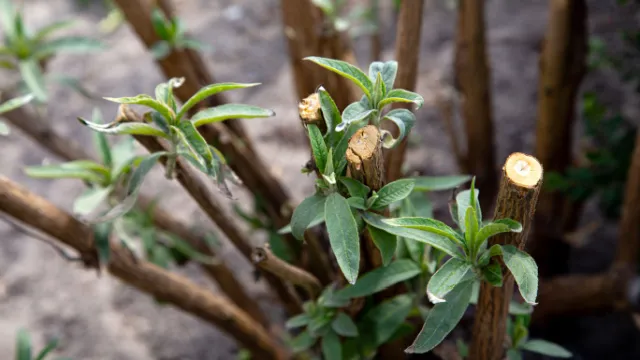
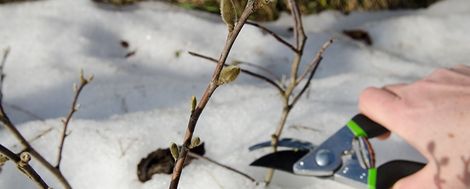
Shrubs that bloom on new wood can be pruned in March, including the hydrangea and butterfly bush (Buddleja). Prune these back deeply to about 30 cm above the ground, just above a few healthy leaf buds. By pruning rigorously, the shrub branches nicely and produces many large flowers. The garden hibiscus requires a less rigorous pruning approach. Only remove dead branches or lightly prune the youngest parts of the branches.
Early blooming shrubs, like witch hazel and winter jasmine, can also be pruned in March after they have bloomed. For witch hazel, only cut away too long or unsightly shoots to maintain the shape. Prune winter jasmine into shape by cutting away crossing branches. Leave some younger branches because they will produce growth and blooms for the new season. For wisteria in March, cut back the side shoots to three buds from the main branches.
Leave spring-flowering shrubs, such as forsythia, ribes, and early-blooming spirea, alone. These shrubs bloom on old wood. If you prune them in March, you cut off the flower buds. The same goes for mophead or lacecap hydrangeas (Hydrangea macrophylla). However, Annabelle hydrangeas bloom on new wood and can be pruned in March. Pruning them back significantly ensures a richer bloom with larger flowers.
Pruning Fruit Trees
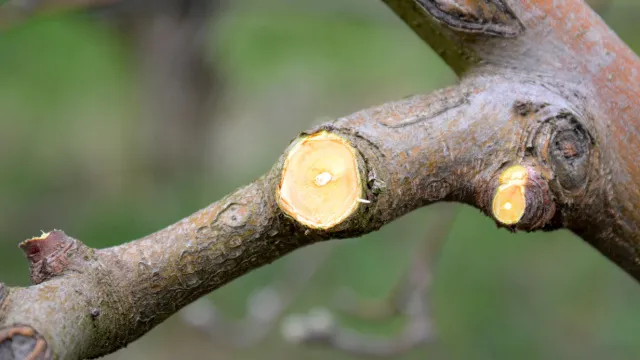
Fruit trees are pruned to encourage the formation of new branches. There are two types of fruit trees, pome fruit trees, and stone fruit trees, each pruned at different times.
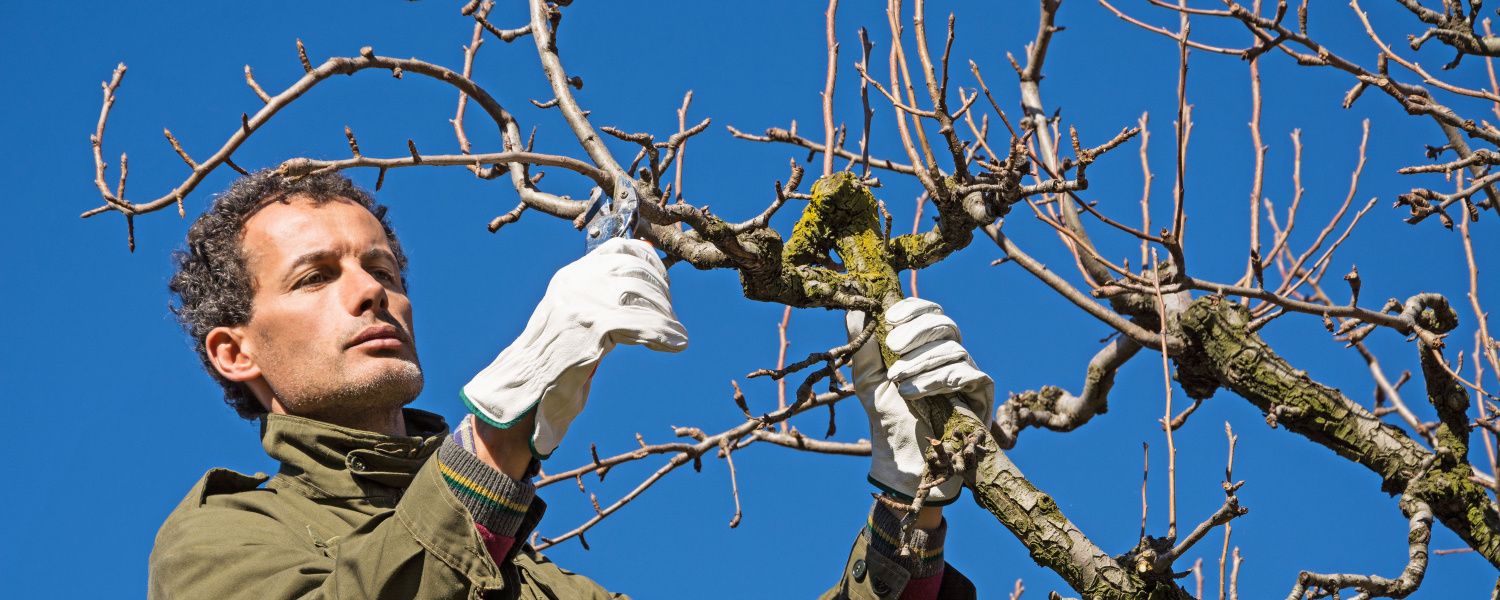
Apple and pear trees are pome fruit trees. These fruit trees can be pruned between January and the end of March — preferably a bit later than earlier because the fruit trees are susceptible to diseases such as fruit tree cancer in the first months of the year. This fungal disease mainly spreads in November and December with wet weather. Apple and pear trees are pruned similarly by removing the vertical, upward shoots. These fruit trees rely on horizontal branches. If you need to prune these branches because they are protruding, halve them.
Stone fruit trees like plums, cherries, peaches, and apricots are pruned from mid-April to mid-September. So, just after blooming in April/May or harvesting in August.
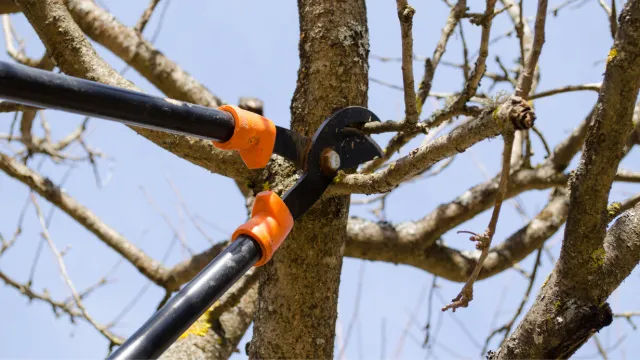
To prune the higher branches of fruit trees, telescopic pruning shears are handy tools.
Pruning Roses

Roses can also be pruned in March to promote good blooming. For bush roses, cut away all the old wood and weak branches and prune the healthy branches back to three buds. Standard roses are pruned in the same way as bush roses but at about one meter in height. The shoots can be pruned back to about 15 centimeters. Climbing roses must be rejuvenated and guided every year. Cut some old branches as low as possible and tie young branches up. Miniature roses can be cut back to 5 to 10 centimeters above the ground. With grafted roses, always cut away wild shoots as soon as they appear.
Pruning Tips
- Preferably prune on a dry and frost-free day. Frost and moisture make plants more susceptible to diseases.
- Always use clean and sharp pruning shears. Blunt shears make ragged pruning wounds that give fungi more chances to spread. This article explains how to sharpen pruning shears yourself.
- Keep the cutting blade (the thin side) of your pruning shears always on the other side of the trunk or branch you’re cutting. This prevents bruising in the branch that stays.
- Use the right pruning tools. For branches up to about 2.5 cm thick, use pruning shears. If the branch is thicker, use a pruning saw or loppers. If you tackle them with pruning shears, you will need to wriggle, which causes bruises that do not aid wound healing.