Pruning
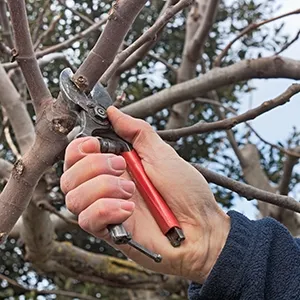
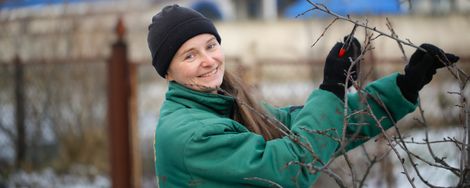
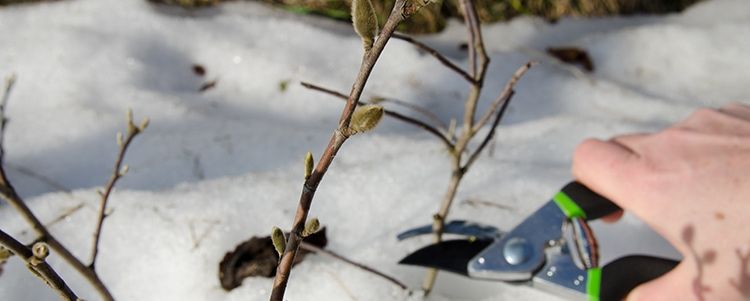
As long as the temperature remains above freezing, and it is not so bleak that no sensible person dares to venture outside, you can prune trees and deciduous shrubs in the middle of winter. Most species, that is. Exceptions are birch, walnut and maple, which will bleed if you cut them now. Wait with these species until the beginning of the summer. And trees that blossom is spring you should only prune after the flowers are gone.
A separate case is grape, which you really have to prune no later than January. Do this preferably on a sunny day when it is not freezing and cut the branches above the third eye.
Potted plants
Tub plants such as oleander, laurel or fuchsia cannot withstand frost and hibernate best between 5 and 10 ° C. A frost-free, airy and not too dark place is ideal for helping them through the winter. If you do not have the space to keep them indoors, protect them as well as possible. Put the pots together in a place sheltered from the wind. Use supports so that the pots do not rest directly on the frozen ground and place reed mats around them or cover the plants with special water-permeable fleece cloth. If solid frost is predicted, you will also have to protect the pots. Pack them with burlap or bubble wrap. This also applies to hardy potted plants such as conifers and boxwood.
Perennials
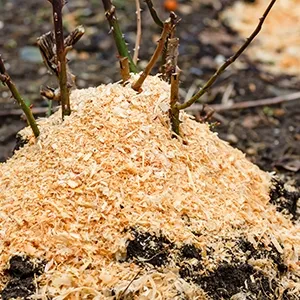
Most perennials die above ground in the winter. You can cover them with some peat or sawdust to protect the roots. A layer of peat, sawdust or tree bark around the plant is also a good precaution for shrub roses. With stem roses it is important to pack the location of the oculation (the bulge where the ornamental rose is grafted onto the stem). There is a special “stem protection” for this, but a piece of jute also works.
New life in the garden
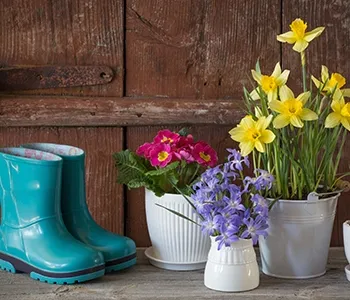
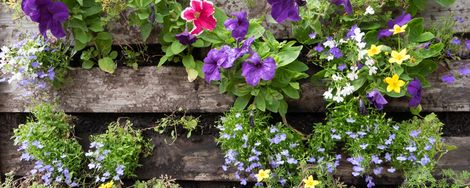
Pots with snowdrops, blue grapes and other spring bulbs bring colour to the terrace very early in the year. And in the vegetable garden you can already plant chives, onions and shallots.
The lawn
This month you can treat the lawn against moss growth by sprinkling iron sulphate. Tip: the grass is extra vulnerable when it is covered with snow or when it freezes, so avoid walking over it as much as possible.
Maintenance
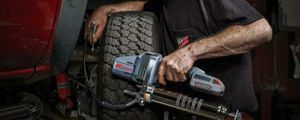
The winter months are the time to bring your garden tools in top condition for the coming garden season. Sharpen the hedge trimmer, have the lawn mower serviced, check your other garden tools and repair them if necessary. Don’t wait until spring hits you.
And of course, now it is time to make plans for the new garden season. Looking around on the internet, gathering ideas, designing new garden lay-outs and planting schedules … it is even possible with 15 degrees of frost.