Making lifelike rocks is not all that difficult and you do not need any special materials or tools. There are different ways to proceed, as a look at this Pinterest page shows. Here we elaborate on two types of do-it-yourself rock.
Small rocks
The simplest way to make smaller rocks and boulders
Materials
- Filling: newspapers, polystyrene or cardboard
- Fine-meshed chicken wire
- Cement and sand
- Optionally: paint
Tools
- Nippers
- Trowel
- Sponge
- Work gloves
This is how you proceed:
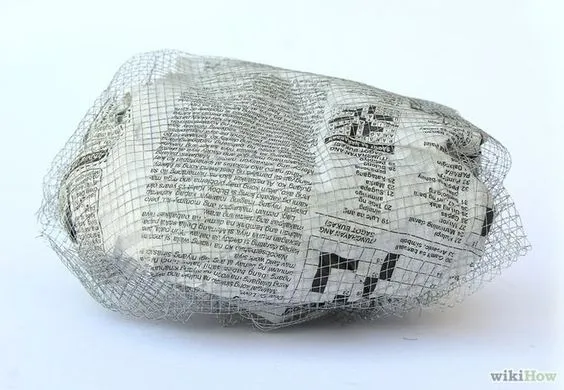
- Make the desired shape with the filling material. With old newspapers, you get a more or less round boulder, with stacked pieces of polystyrene you can achieve a layered effect.
- Wrap the chicken wire around this core.
- Make the cement (3 parts of sand on 1 part of cement) and spread it over the mold.
- Allow to dry and apply a second layer of cement, where you close the spots where the chicken wire can still be seen.
- Allow the layer to dry a little and use a wet sponge to apply a rough texture.
- After the rock has dried completely, you can leave it as it is or experiment with paint, for example, to give it a weathered or mossy appearance. Tip: apply the paint with a sponge for a natural effect.
Here you can see in 9 steps how to make this type of rock.
Larger rocks
With a frame of wood or iron covered with jute, you can create lightweight rocks in any desired shape.
Materials
For the frame: wood or reinforcing steel
- Screws/iron wire
- Jute
- Cement and sand
- Optionally: paint
Tools
- Nippers
- Saw/hacksaw
- Screw drill
- Trowel
- Sponge
- Work gloves
This is how you proceed:
- Make the frame by screwing pieces of wood together or bending concrete iron and connecting with iron wire. The larger the rocks, the stronger the construction must be. Make sure there are sufficient cross-connections.
- Wrap the frame with chicken wire and secure it with iron wire.
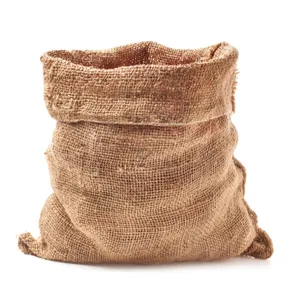
- Cut jute – old burlap bags, for example – into pieces of about 50 square centimeters.
- Now make cement (1 part cement on 3 parts sand) and use more water than normal to get an aqueous paste.
- Dip a piece of jute in the cement mixture until the material is well soaked, drape it on the chicken wire and hook it with iron wire.
- Attach the following rags to the frame in the same way. Always have them overlap slightly.
- When the entire rock under construction is covered with jute, allow it to dry.
- The next day you apply a new layer of cement, this time not so wet.
- The further finish is the same as in the first example.
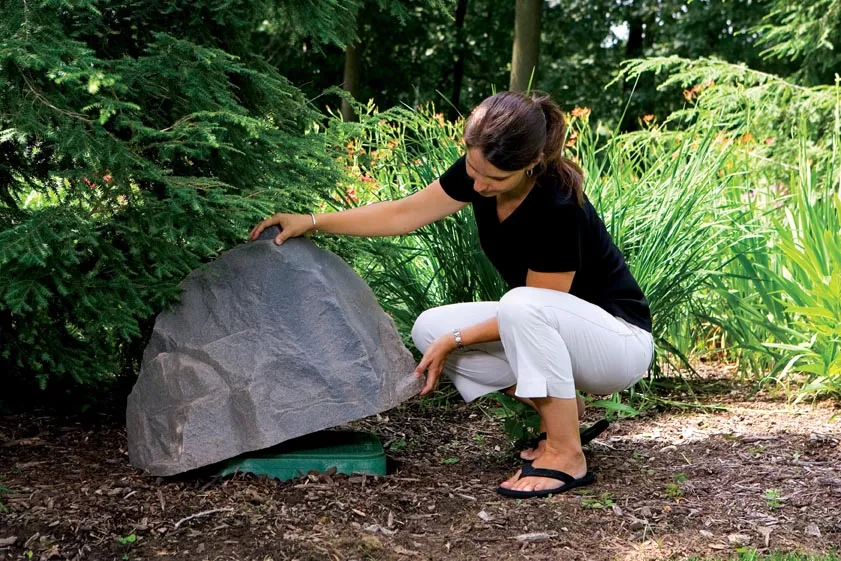
Tip: Although light in weight, a larger hollow rock can be difficult to move. Perhaps the most convenient way is to make it where you want it.
More original garden ideas can be found in A vertical garden made from a pallet and Raised garden borders.