Good insulation keeps a house warm in the wintertime and cool in summer. Therefore, in a well-insulated home, you use less energy for heating or cooling the house. Optimal insulation of a house starts with good insulation of the floor. In most cases, the floor is the coldest part of the house. Insulating the floor yourself is easy to do, and below, we discuss how to proceed and what you should pay attention to.
Insulate a suspended floor
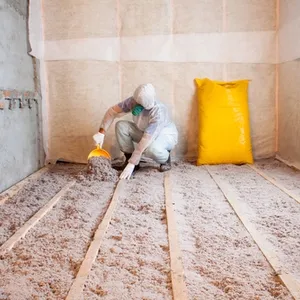
How do you insulate a suspended timber floor? It is best to insulate a suspended timber floor between the beams with insulating material. It is not necessary to insulate the beams themselves, as the wooden beams also act as insulation.
Types of insulation materials
Before you start insulating your suspended timber floor, you have to choose which insulation material you want to use. An important principle when insulating a wooden floor is that the floor must always be able to “breathe”. Not all materials are suitable for insulating a wooden floor.
Therefore, you must use insulation material that is vapour permeable. Vapour-permeable insulation materials, without the use of foil, ensure that the insulation can still breathe. If you use vapour proof material, the moisture cannot escape. It will penetrate the wood and can cause wood rot. Below you will find examples of proper insulation materials for a wooden floor:
Mineral wool
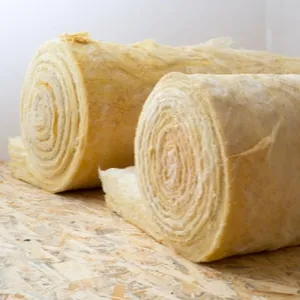
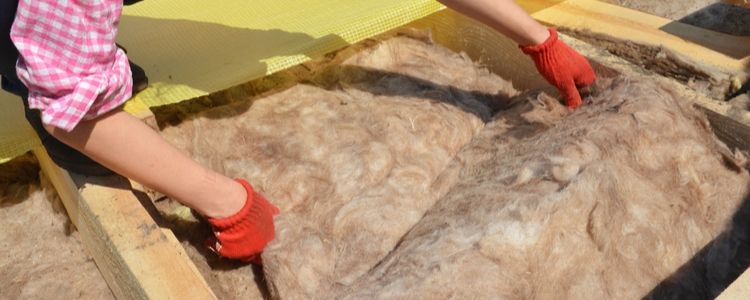
Mineral wool includes two types of insulation material, glass wool and Rockwool insulation. These materials are spun from glass or rock, and they are durable materials without chemical components. Mineral wool is sturdy, durable and relatively inexpensive. It has both soundproofing and thermal properties and thus will help to insulate against temperature and noise. You can easily roll out the blankets of mineral wool between the wooden beams. Choose mineral wool such as Rockwool, glass wool or glass wool panels such as MW35.
Natural materials
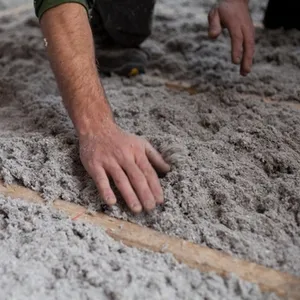
Alternatively, you can choose to insulate the suspended timber floor with natural materials. You can opt for recycled cotton, sheep wool, flax, wood fibres, and nowadays, even hemp. As with mineral wool, insulation material made of natural materials is also available in blankets that you can easily roll out between the beams. In addition, you can place insulation flakes between the beams and the insulation mats.
How to attach insulation material
Choose to secure the insulation with nails, screws or staples. This way, you can easily detach the material during later renovations and even reuse it. If you choose to glue the insulation material, it will be difficult to remove it in the future. Always use safety goggles, dust mask and gloves and ensure adequate ventilation in the room. The fibres of the insulation material can cause irritation. Therefore, always rinse the skin afterwards with lukewarm water without soap.
Insulating timber floor on top
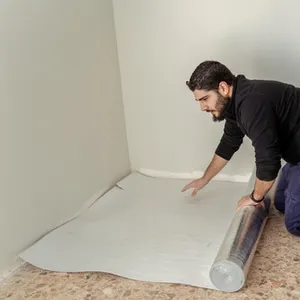
However, what should you do if the timber floor is not suspended or the crawl space is inaccessible? In such cases, you can also insulate the top of the wooden floor. The biggest disadvantage with insulating the wooden floor on top is that the floor becomes a few centimetres higher. That means that you may have to shorten the interior doors or adjust other parts of the house. You can insulate the top side of the wooden floor by applying an insulating underlay or a screed.
Soundproofing insulation
Wooden floors often cause a noise nuisance, especially if you live in an apartment building. Good insulation prevents noise nuisance from roommates or neighbours. A poorly insulated floor will not only let through heat or cold but also a lot of noise. A crawl space along with insulating the suspended floor is the best way to soundproof the area. When choosing insulation material, you can opt for glass wool sound insulation mats. Applying an insulation layer of glass wool ensures that the vibrations are absorbed, and hence, no more sound.
Want to learn more about insulating your house? Read our article: How do you keep your house warm during the winter?