Imagine harvesting apples, pears, cherries, and other fruits from your own garden — a dream for many people. However, you don’t have to limit yourself to dreams. With columnar fruit, you can plant an orchard in the smallest garden or even in pots on the balcony.
What is columnar fruit?
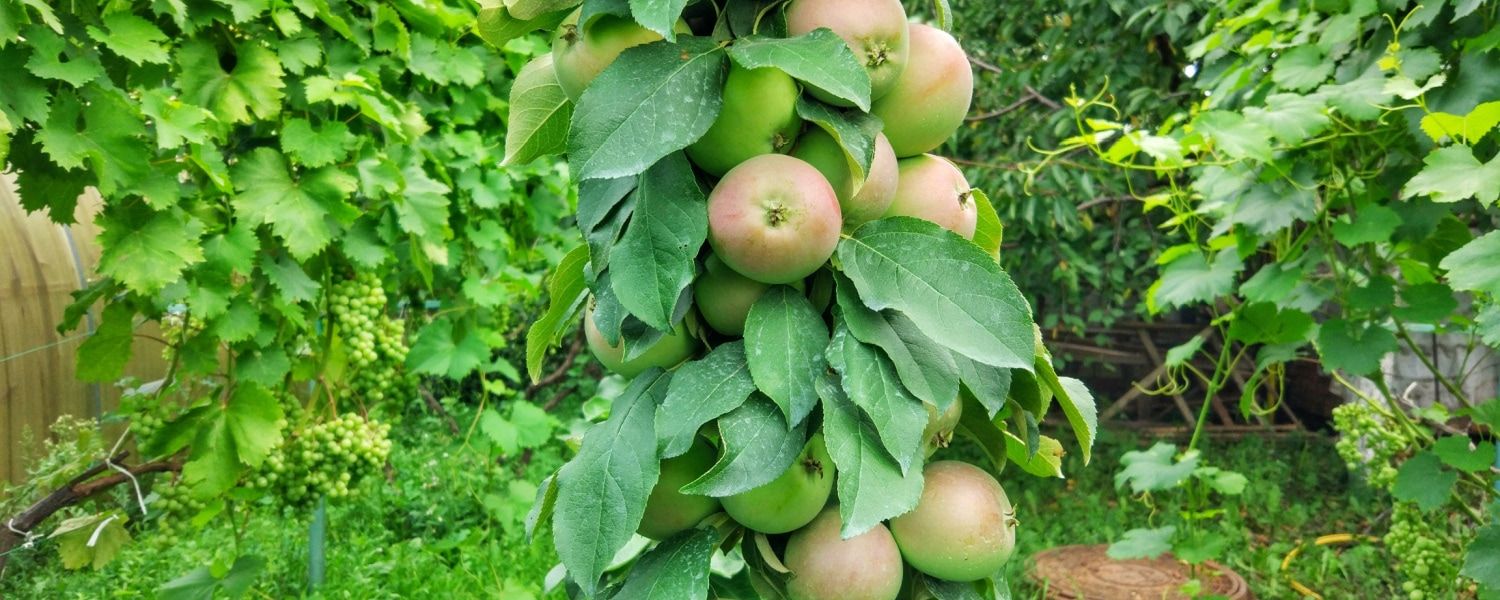
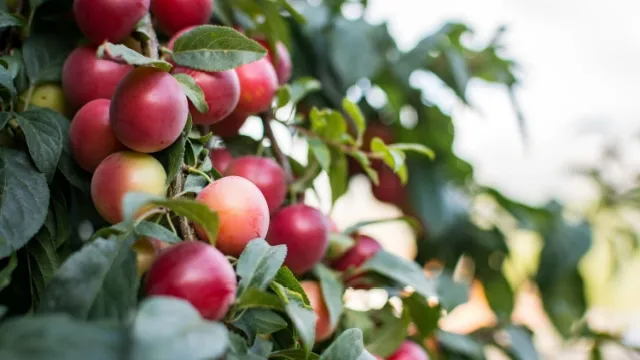
Columnar fruit is a separate group of fruit trees with a slender growth shape grafted onto a special rootstock, which means that the tree grows slowly and hardly branches. Columnar fruit trees usually do not grow wider than 20-40 cm, and the fruits grow close to the trunk. Although they take up little space, columnar fruit trees yield a rich harvest. The apples, pears, and other fruits are the same size as fruits of normal fruit trees.
Planting columnar fruit in the garden
Columnar fruit trees require loose, fertile soil and thrive best in a sheltered spot in full sun. Dig a spacious planting hole as deep as the height of the root ball and twice as wide. The grafting spot — recognizable by the thickening at the bottom of the trunk — must remain about 8 cm above the ground. Mix the removed soil with compost and fill the planting hole with it. Firmly press the soil around the root ball. It is advisable to tie the fruit tree to a stick or pole for support. Most columnar fruit trees are auto-flowering, meaning they don’t need a pollinator. But specifically with apples, it is worth planting two different varieties. These will pollinate each other, ensuring a rich harvest.
Tip: plant several columnar fruit trees in a row, and you’ve got yourself a beautiful fruit hedge.
Columnar fruit in a pot
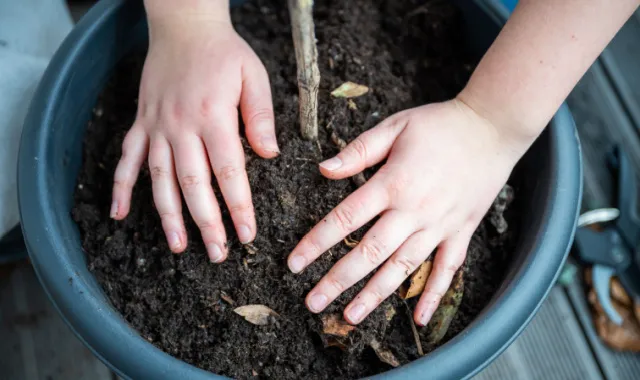
It is best to transplant a columnar fruit tree into a larger pot immediately after purchase. It should be able to hold at least 30 liters for a young fruit tree. Fill the pot with a mixture of garden soil, compost, and sand. Place the pot on pads — bricks, for example — to allow the water to drain. After about six years, the soil in the pot is exhausted, and you will have to transplant the tree into a new pot.
Pruning columnar fruit

How you prune the trees depends on the type of fruit. Apple trees, for example, do not need to be pruned; they grow slender by themselves. Cherries and plums tend to grow in width as well. Therefore, prune them in time to keep them in shape. Keeping the side shoots short will strengthen the center shoot. You can also prune columnar fruit in height if needed but only do this after approximately six years. If you prune earlier, the tree will branch too much. Always use clean and sharp pruning shears to prevent frayed pruning cuts.
Care of columnar fruit
Columnar fruit trees require little care. Provide enough water, nutrients, and a little topiary, and you will be rewarded with a bountiful harvest for decades to come. The most common reasons for problems are:
- too small pots
- too little sun
- falling over in the wind
- frost damage to the roots of trees in pots