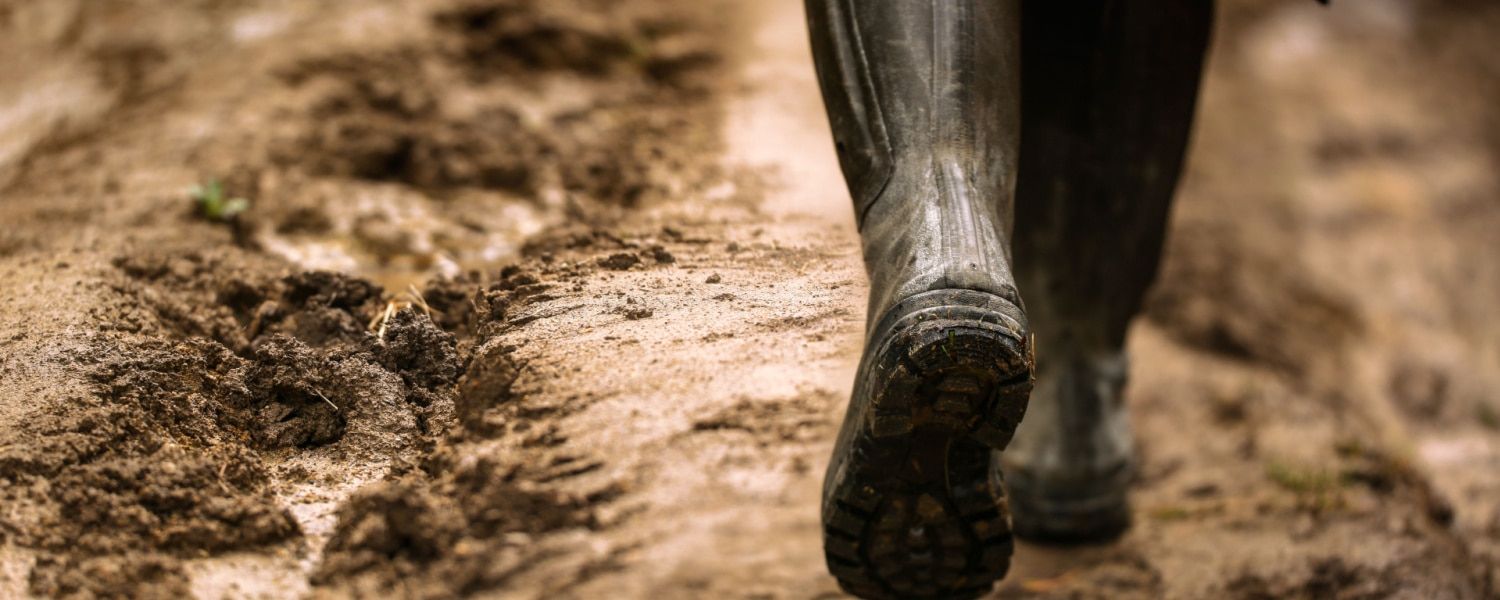
Workwear and work shoes provide varying levels of protection against rain or when working in wet areas. When choosing the correct clothing, one should consider breathability and water permeability.
The terms ‘waterproof’ and ‘water-repellent’ are often used interchangeably, but they mean different things. The difference between waterproof and water-repellent is the water pressure that a material can withstand before it lets water through. This is measured using the ‘water column’, the amount of water in millimeters per square centimeter.
Waterproof Workwear
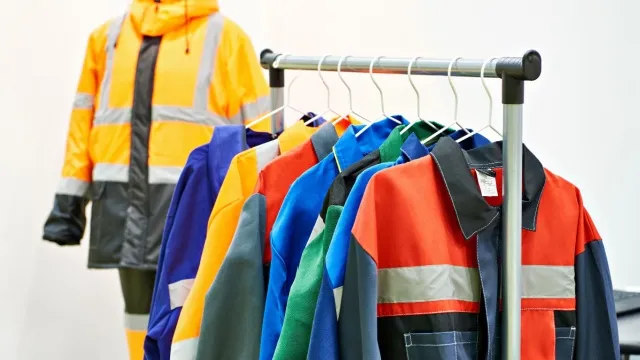
Waterproof clothing provides the highest level of protection against rainy weather and wet workspaces. Waterproof fabrics have an outer layer and an inner layer. The outer material is usually made of polyester or polyamide, with a laminated membrane or a coating that prevents water from penetrating the fabric. Therefore, the waterproofness is achieved by completely sealing the inner fabric. All hems and seams are also taped or sealed to prevent water from passing through the stitched parts of the fabric.
Water-Repellent Workwear
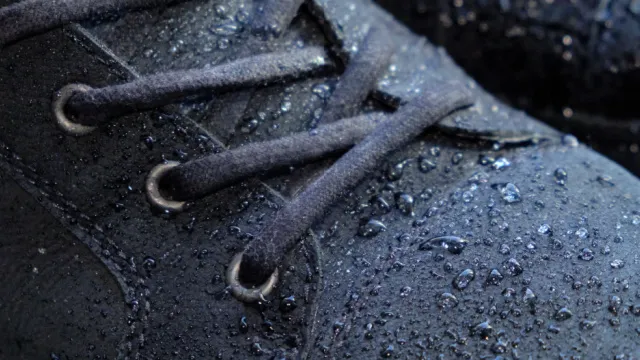
Water-repellent clothing offers basic protection against rain. Water-repellent fabrics are ‘hydrophobic’, meaning they repel water. These fabrics are treated with a DWR (Durable Water Repellent) finish which ensures that water forms droplets on the surface of the fabric, instead of penetrating it. Unlike waterproof clothing’s coating, a DWR finish does not affect the fabric’s breathability. The lower level of protection is balanced by the advantage of greater wearing comfort, as sweat can escape through the minuscule spaces between the fibers. A commonly used water-repellent material with good breathability is Gore-Tex.
Maintenance
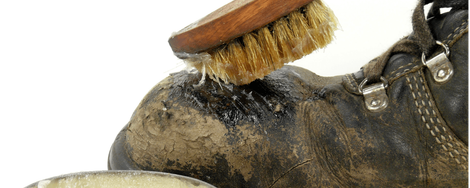
Regular maintenance is necessary to keep waterproof and water-repellent fabrics in good condition. Read here how you can significantly extend the life of work shoes with the right precautions and maintenance products.