When buying your first drill, or if your old one needs replacing, you’ll find no shortage of options. Here, we’ll outline some key considerations for your purchase and offer tips on saving money.
We’ve said it many times on our blog: the best tool is the one that does what you expect from it —no more, no less. If you only use your drill three times a year to hang a picture, your needs are very different from those of a professional or a keen DIY enthusiast.
Consider What You Really Need
You can go to great lengths when purchasing a new drill. Advanced professional models are equipped with sensors that measure resistance and pressure during drilling and provide real-time feedback. They can be connected to smartphones or tablets via Bluetooth or Wi-Fi to monitor performance, track usage statistics, and receive firmware updates — fascinating for real enthusiasts yet not very relevant for occasional users.
Cordless or Electric?
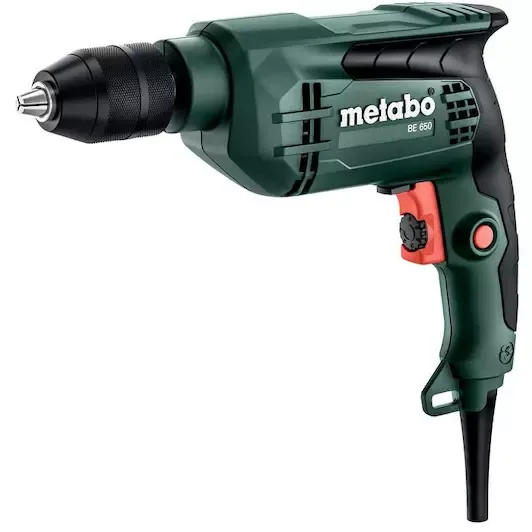
One of the main considerations when choosing a drill is whether to go for cordless or electric. Cordless drills offer the freedom to work anywhere and nowadays match corded models in power. However, batteries require proper use and special precautions during storage. Therefore, a corded drill is not a bad choice for occasional users. Electric tools are also generally cheaper than cordless machines with comparable specifications. You can get a quality corded drill from a professional tool brand, suitable for light work, for around €100. Take this model from Metabo, for example.
Technical Specifications
How much power and strength does your drill need? For most tasks, a power range of 450–600 watts is sufficient. A battery with a capacity of 1.5 Ah (amp-hours) provides enough charge to complete these tasks in one go. The torque, expressed in Newton meters (Nm), determines the strength of the machine: the higher the torque, the tougher the jobs it can handle. More than 54 Nm is rarely necessary.
Think About the Future
Another consideration when purchasing a drill is: what might you need later on? Don’t buy a new tool just for the job at hand — think about what you might use it for in the future. If you spend a bit more now on a drill with a hammer function, you’ll be able to drill into concrete and hard stone when needed.
More Drill for Your Budget
You don’t want to pay more than necessary for whichever drill you choose. Here are a few tips to get the most for your money.
- Look and Compare
Online shops usually have a wide selection, making it easy to compare products and find one that best fits your needs in terms of price and performance. Also, compare prices from different sellers. What accessories are included in the purchase? Seek advice from the retailer or customer service of an online shop — they should be able to help you find the best price/quality balance.
- Buy Online
The internet isn’t just a place to compare products and prices; it’s also a way to save money. Online stores have lower operating costs than physical shops which is reflected in the price. Often, you’ll find that prices for the same tools are lower than in hardware stores or specialist shops.
- Take Advantage of Offers
Once you’ve decided on your requirements, have a look at promotions that fit your needs. Tool stores often have ongoing promotions, and during certain periods, such as Father’s Day or Black Friday, you can find spectacular discounts. You may be able to buy your chosen drill for half the price or get a machine that far exceeds your expectations within your budget.