Threading is a method used to make threads on and in metal products. The thread is the helical spine or elevation applied to items such as a bolt and the inside of a nut which are used to fasten two objects together by twisting and clamping them.
Threading
There are many different methods of threading, including subtractive methods (such as CNC milling or hot threading), transformative methods (forming and casting), additive methods (such as 3D printing), or combinations of different methods.
Thread types

Threads come in all shapes and sizes, each for its application. The most common thread is the one where the screw moves forward when turned clockwise. The terms thread and counter thread are often used to indicate right-handed and left-handed threads.
Thread milling and tapping

In addition to threading, the production of screw threads can also be done via tapping and thread milling. Cutting threads in a hole is known as thread tapping, and for thread tapping, the drilled hole must be smaller than the outside diameter of the tap. If this is not the case, you can no longer cut threads in the material.
Thread milling is a method of producing threads through milling machining, which requires a CNC machine (Computer Numerical Control) that makes a spiral movement. Thread milling produces threads with the circular spiral motion of a rotary tool, and a thread mill is designed to cut threads by milling.
Thread milling has some advantages over thread tapping. The main advantage is a minimal risk of process interruption because the cutting forces are low and the chips are short. Thread milling also gives a higher thread quality and is excellent for materials that are difficult to machine. You can use the same cutting tool in thread milling for right and left-hand threads.
Threading on lathe machine
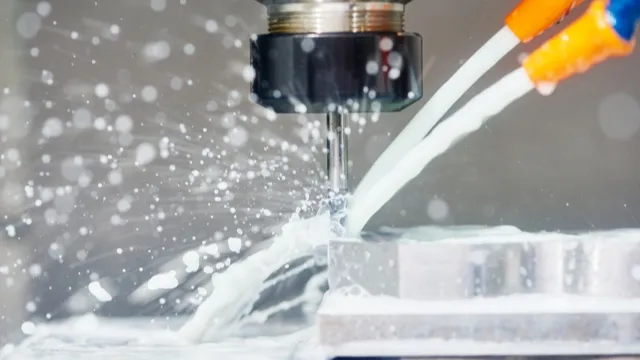
Threading is a profession in its own right and quite difficult. But nowadays, you can cut threads with extreme precision with a modern CNC lathe, which is especially important for small screws and nuts. Model 535A retains the robustness of the industrial workhorse, and it also has several features that make thread cutting more productive. A large chip tray and oil reservoir make the model 535A from RIDGID ideal for uninterrupted thread cutting.
Thread pitch chart
For CNC threading on a lathe, you can use a chart to know the different dimensions and ratios. A threading table shows the drill diameter with which you have to drill the hole to tap the desired thread. Below are some terms that will help you understand a threading chart:
P = Pitch, mm or passes per inch
β = The beta angle
ϕ = The helix angle
d / D = The maximum diameter, external / internal
d1 / D1 = The minimum diameter, external / internal
d2 / D2 = The pitch diameter, external / internal
If you want to read more about which dust mask to use when handling when threading on a lathe, read our article “Which dust mask do I need?“.