A brick patio or driveway is beautiful and requires relatively little maintenance work. But moss and algae can cause a green layer and make it slippery, while oil or paint stains affect the natural look. From time to time cleaning maintenance is necessary, especially after the winter months when the bricks look a little drab and dirty. Now we will cover the main types of pollution and give tips for:
- Cleaning polluted bricks
- Cleaning bricks containing oil and other stains
Types of bricks
For your terrace or driveway you can choose between two types of bricks: ceramic bricks and concrete bricks.
Ceramic bricks

These bricks are made of baking clay, just like regular bricks. The only difference is that the baking time is longer and the temperature higher, giving them more strength and durability. The colour of these bricks is that of the used clay. No pigment has been added. This makes them 100% colourfast and gives them a natural look.
Concrete bricks
A cheaper alternative to clay bricks. They are less colourfast and sometimes they are equipped with a protective layer to make the colour last longer. Therefore you must be careful if you want to clean them with a high pressure cleaner. A good option is water-permeable concrete bricks, which ensures that the rain water is quickly absorbed into the ground.
Clean your brick patio by removing natural pollution
Actually, in this context pollution is a weird word, because it’s just nature doing its job by covering your terrace or driveway with plants. But we do not want to have a green haze on our beautiful brick patio or on our smooth driveway, so every so often we need to take some action.
The cause of green layers
Green layers on bricks are caused by moisture. Algae will take their chance if water remains after rainfall, especially in places with little sun. It doesn’t matter how many times you remove it, This layer returns again and again. Ensuring a good drainage is the best way to control this problem.
Ways to remove green layers and moss on bricks
- DIY tips
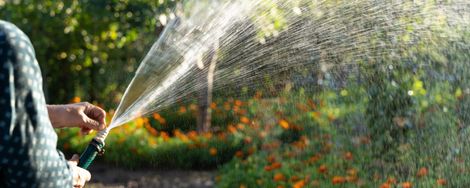
Green soap, bleach and calcium remover are all suitable to remove surface layers of algae and moss. Dissolve it in hot water, pour it over the bricks, let it sink in, scrub the patio or driveway with a strong broom and rinse it with the garden hose.
- Special products
You can find various cleaning and removal equipment at hardware stores and garden centers. Ask the salesman for advise about which product is the most suitable for your patio or driveway and for the degree of pollution.
- High pressure cleaner
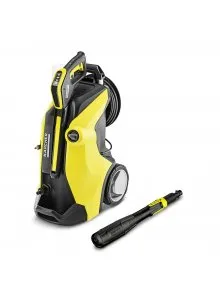
Renting a pressure cleaner to attack the green layers with an extremely strong water jet is the fastest way to clean your brick patio or driveway. You must be careful when cleaning concrete bricks. Make sure the nozzle is not too close to the surface, because the water jet can damage the top layer. As a result, the colour is affected and can create small holes, which opens the way for moss to grow. After cleaning, you can sweep sand in the joints between the bricks. Not only does this look nice, it also slows down the growth of moss. If you are going to regularly clean your brick patio, car, bike and all kinds of stone walls, we recommend you to purchase a high quality pressure cleaner. At Klium you can buy the Karcher K5 or Karcher K7 at a good price.
Show me all high pressure cleaners
- Outsourcing to a professional
If you want to enjoy your terrace but you do not want to maintain it yourself, you could hire a professional. The advantage of a professional is that he/she uses the right products and knows exactly how much pressure the bricks can take without damaging them. Professional cleaners usually charge a price per square meter, depending on the severity of the pollution.
Tips to prevent green layers and mos
In our climate it is not possible to completely avoid nature from growing on our patio or driveway. But there are a few things you can do to make it more difficult for moss and algae.
- Make sure you have a good drainage, so that rain water does not remain.
- Regularly scrub the surfaces with hot water is a great preventative measure.
- Or make it a habit to pour boiling water from the potatoes over the terrace or the driveway: there are people who truly believe in this method.
- A protective coating can make it harder for algae to attach itself. There are several products available which you can apply yourself using a plant spray.
Cleaning bricks containing oil and other stains
It’s not just nature that leaves its mark on our patio or driveway. We ourselves also play a part. Nowadays bricks are so hard that they are not susceptible for many types of contaminants, but oil and paint can cause a lot of damage. In addition, chewing gum, tire tracks and tar can also cause ugly layers. And even fallen leaves can leave ugly brown spots, especially when they contain a lot of tannic acid, such as oak leaves. So in the fall you must regularly sweep fallen leaves from your patio and your driveway and definitely not leave it until the big spring cleanup.
Special products
You can find cleaning products in hardware stores or garden centers for all kinds of stains. The use of this is recommended, because they are specifically formulated for the type of pollution. Whether you prefer a chemical compound or 100% natural products, it is always important to react quickly. The longer you leave it, the more stubborn the stains become and the more difficult it becomes to clean your brick patio.
Oil stains on the driveway
Oil stains on the driveway are a common phenomenon. If it’s not our car that’s leaking, it is that of the visitor’s or the babysitter’s moped. The same counts for oil stains: the faster you react, the easier it is to remove the stains. If the stain is still wet, you can use an absorbing product first. Soda, sawdust, cornstarch or anything else that absorbs moisture.
Cola for oil spills
As soon as the oil is sucked up and the stain is dry, you can try the following: pour a hefty dash of cola over the stain and leave it overnight. Rinse it off with water so that you’ve mixed some detergent, then turn on the garden hose to thoroughly wash away the last bits. There’s a big chance the stain is now gone.
Another way to remove oil stains is by spraying a lot of detergent. This causes the fat molecules to loosen from the brick and then they can be scrubbed off with hot water.
Stronger products
If the oil is still not completely eliminated, then it’s time for other, stronger products. For example: TSP (trisodium phosphate) or, as a last resort, hydrochloric acid. This is a corrosive agent that you should use with great caution and it is not allowed to soak in longer than a minute. Then you need to remove it completely so that it cannot continue to soak in. It is best to use a high pressure cleaner to clean the treated surface.
Conclusion
Bricks are a great material for patios and driveways: strong, maintenance friendly, attractive, and with a natural look. The best way to keep them nice and to clean your brick patio and driveway is by regularly spending some time on it and by not waiting until algae, moss and stains have firmly attached themselves, making it difficult to remove them.